
Play, Inquiry, and Joy
Pando is a Reggio Emilia inspired school. As such, we view all children as strong and capable. Children have a right to experiences that deepen their connections - to one another, to inspiring ideas, to the natural world, to society, and to their own passions. Our aim is for every child to leave Pando as an enthusiastic learner, aware of their capacity to care and think deeply.
Because we hold a strong image of the child, we also hold a strong image of families and teachers. A child’s family is their first and most impactful teacher. Classroom teachers have the opportunity to serve as expert mentors to our students. Together, families and teachers support children to realize their trajectory, both individually and as a community.
“The patterns which connect...What pattern connects the crab to the lobster and the orchid to the primrose and the four of them to me? And me to you?”

At Pando, everyone
Feels seen, safe, and successful
Before anything else, we must feel seen, safe, and successful. Teachers at Pando come to love and appreciate each child in our care. We accomplish this by listening to children, treating them with respect, and reciprocating their joy. Through authentic relationships, teachers, children, and parents develop a nuanced understanding of one another, enabling teachers to create a rich experience for every child.
Plays
Time spent playing is time well spent. It primes our bodies and minds for joy, curiosity, sustained attention, and intellectual risk-taking. We embrace a pedagogy of play which does not segregate learning or work from play. Gardening, hide and seek, dress up, cloud-gazing, and stopping to smell the roses are all integral parts of our curriculum.
Researches Their Interests
We all learn best when we inquire about something that has piqued our curiosity. Teachers listen and observe keenly to determine children's interests, and use those interests as a jumping-off point for our classroom's dynamic curriculum. Parents and teachers are invited to wonder alongside children, often coming to our own discoveries about the human experience.
Participates in community
We respect and support children's efforts to understand and participate in our complex society by cultivating the ability to adopt differing perspectives, listen, and communicate. When children bring complex, ethical concerns into the classroom, we create a space where these topics can be explored. Children participate in the planning and running of our daily classroom meetings, are encouraged to strive for consensus, master the mechanics of voting, engage in respectful dialogue, and learn to lead, follow, and compromise. Adults live and model this ethos by keeping questions of meaning open, seeking out ideas that stretch us, and reflecting on how our thoughts and actions impact others.
Creates meaningfully
We discover ourselves through the process of creation. When children build elaborate sand castles, when teachers set up their classrooms, and when parents prioritize meaningful family rituals we say something about who we are and who we would like to become. Every day we strive to see ourselves as makers with agency, purpose, and the capacity to make a difference.
Our school’s curriculum is three interconnected parts:
explorations, inquiries, and projects.
Explorations
Explorations are opportunities for children to encounter a range of materials, experiences, and people with no pre-set outcome in mind.
We support explorations by selecting a range of enticing materials so children, teachers, and parents can exchange ideas.
Teacher support explorations by listening to and observing the children, asking open-ended questions in an attempt to determine what deeper themes the children may be investigating.
Inquiries
Inquiries are more targeted, facilitated explorations of a particular question, theme, or idea that arose during open exploration.
During an inquiry, children intentionally use materials over an extended period of time to respond to a question or cluster of questions.
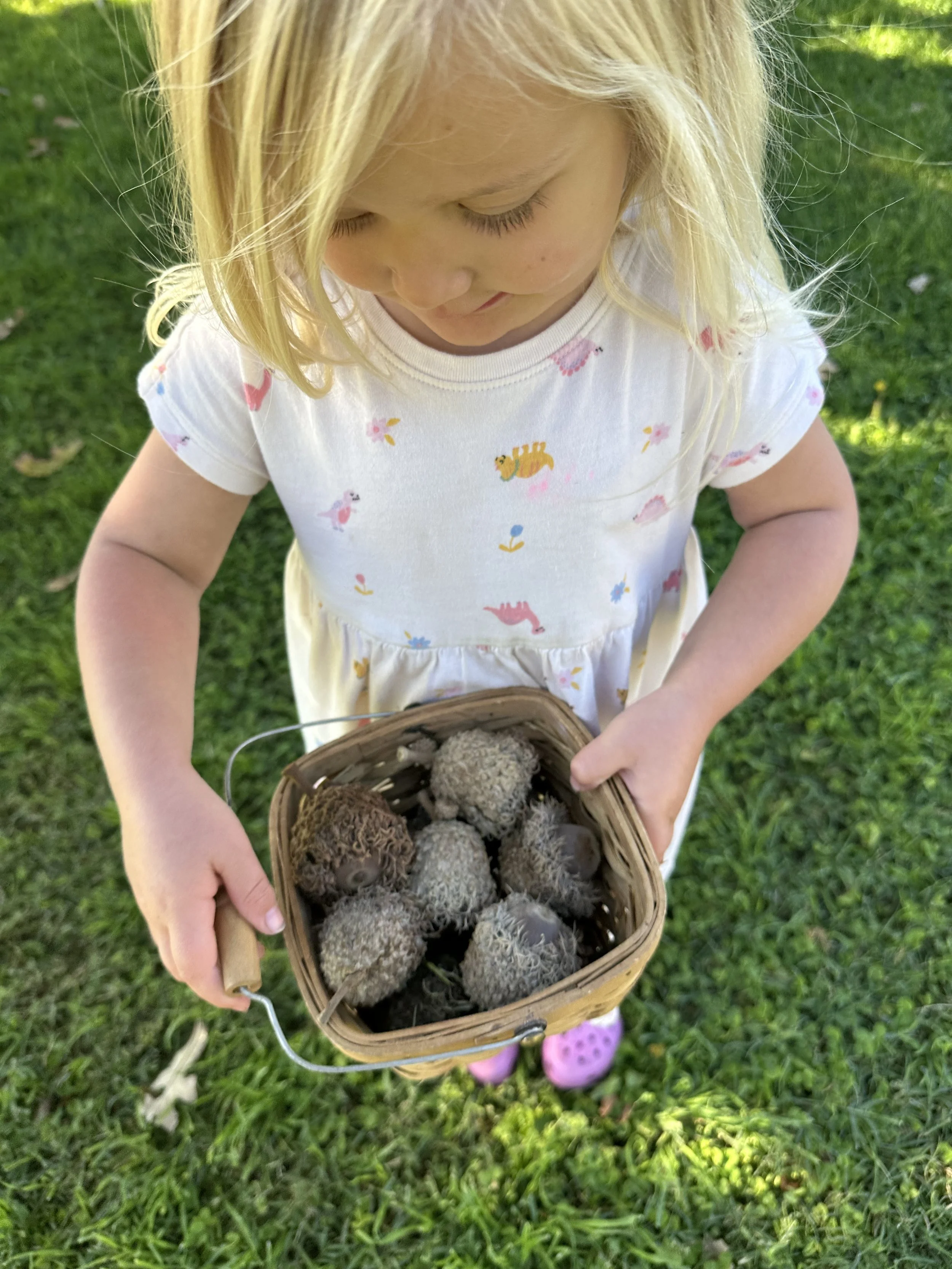
For example, children who have gathered acorns may puzzle over the question, “What can we make with these?” for days or weeks at a time.
The teacher’s role is to listen to and document children’s theories, using statements, questions, novel materials, or peers to guide the children towards new, more sophisticated questions.
Projects
Projects are goal-oriented endeavors formulated and executed by children and teachers together over an extended period of time.
Projects are more linear than explorations and inquiries, often inviting children to work through a series of steps or stages.
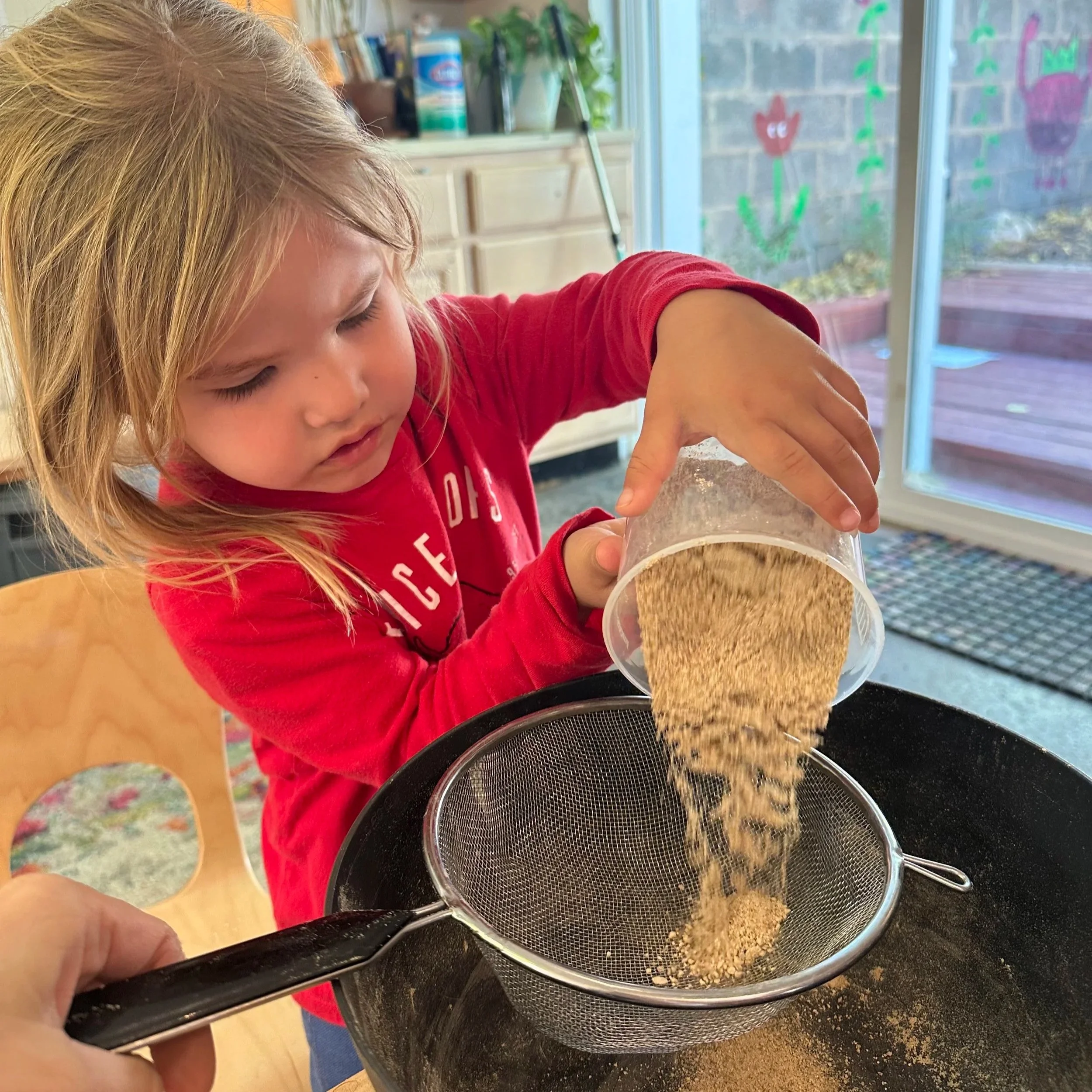
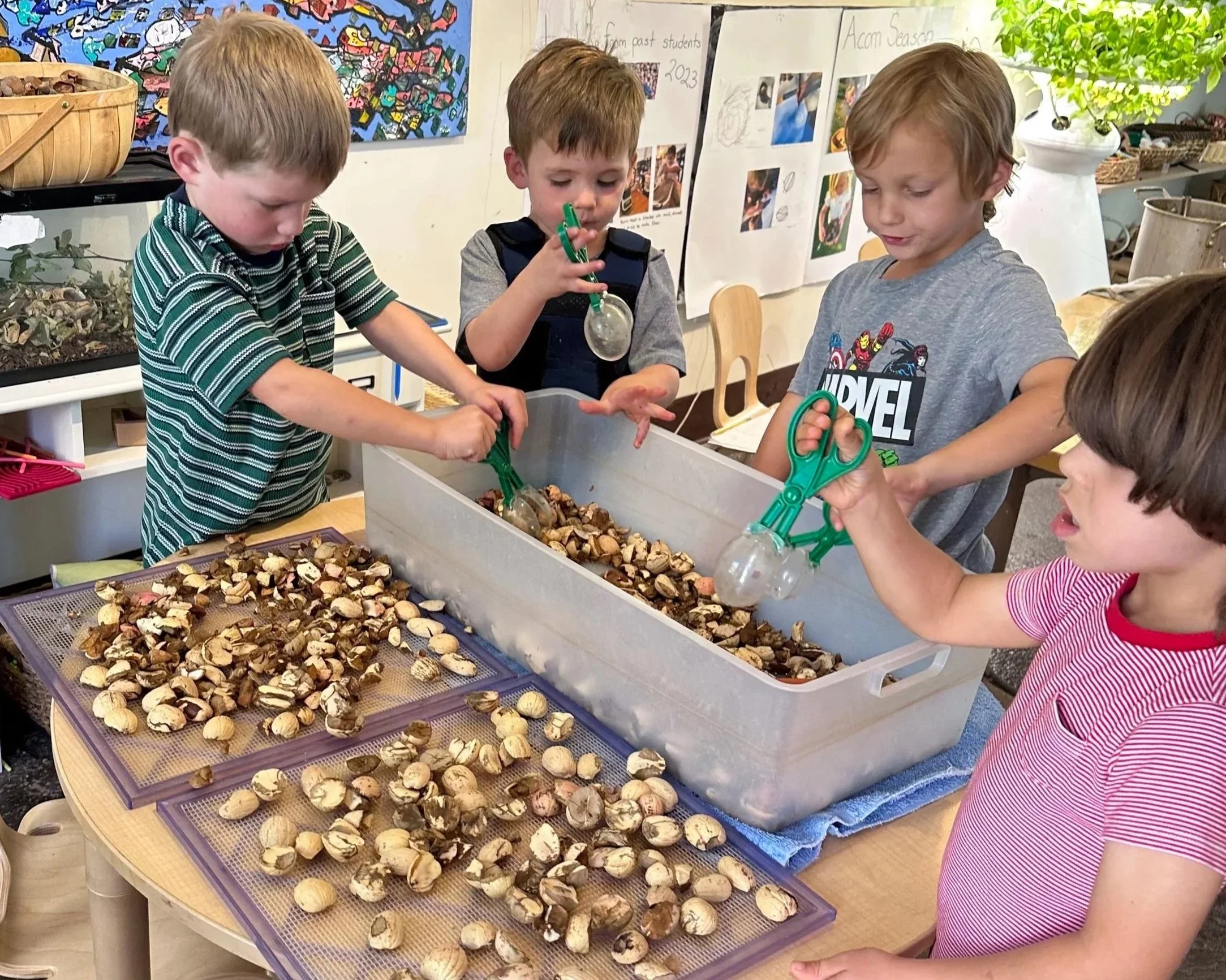
For example, children who have gathered acorns, experimented with how to open them, and wondered about their different parts have now decided to bake acorn flour cookies.
Children will need to work together to develop a plan and then master the skills necessary to prepare the meal in collaboration with teachers.